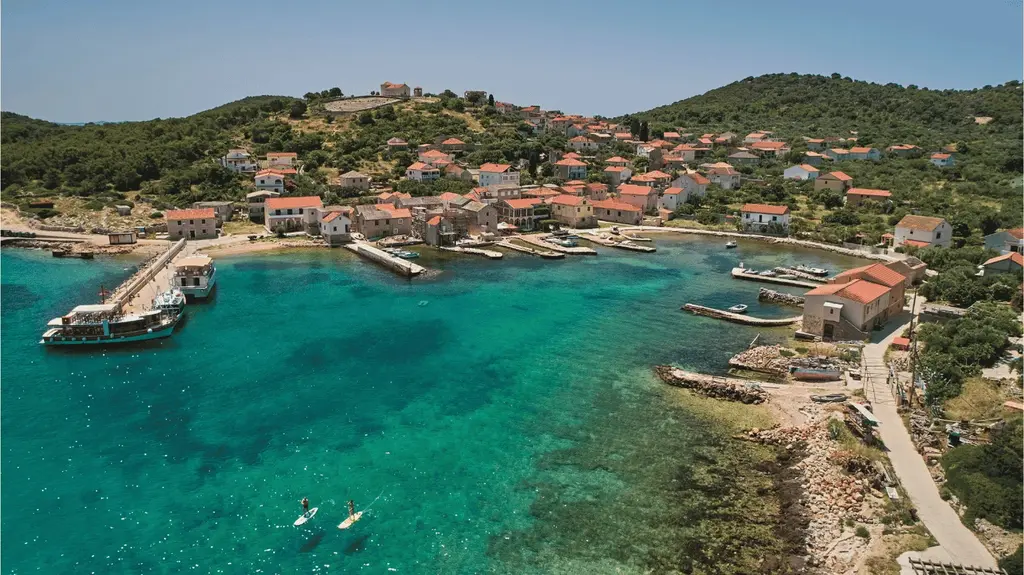
For thousands of years, Vrgada Island has drawn visitors with an inexplicable allure. Those who come to Vrgada once always return.
From the time of the ancient Illyrians to the present day, Vrgada has been a place whose beauty heals body and soul. The crystal-clear sea surrounding the island and its rich cultural and natural heritage make it a true and unique gem of Dalmatia.
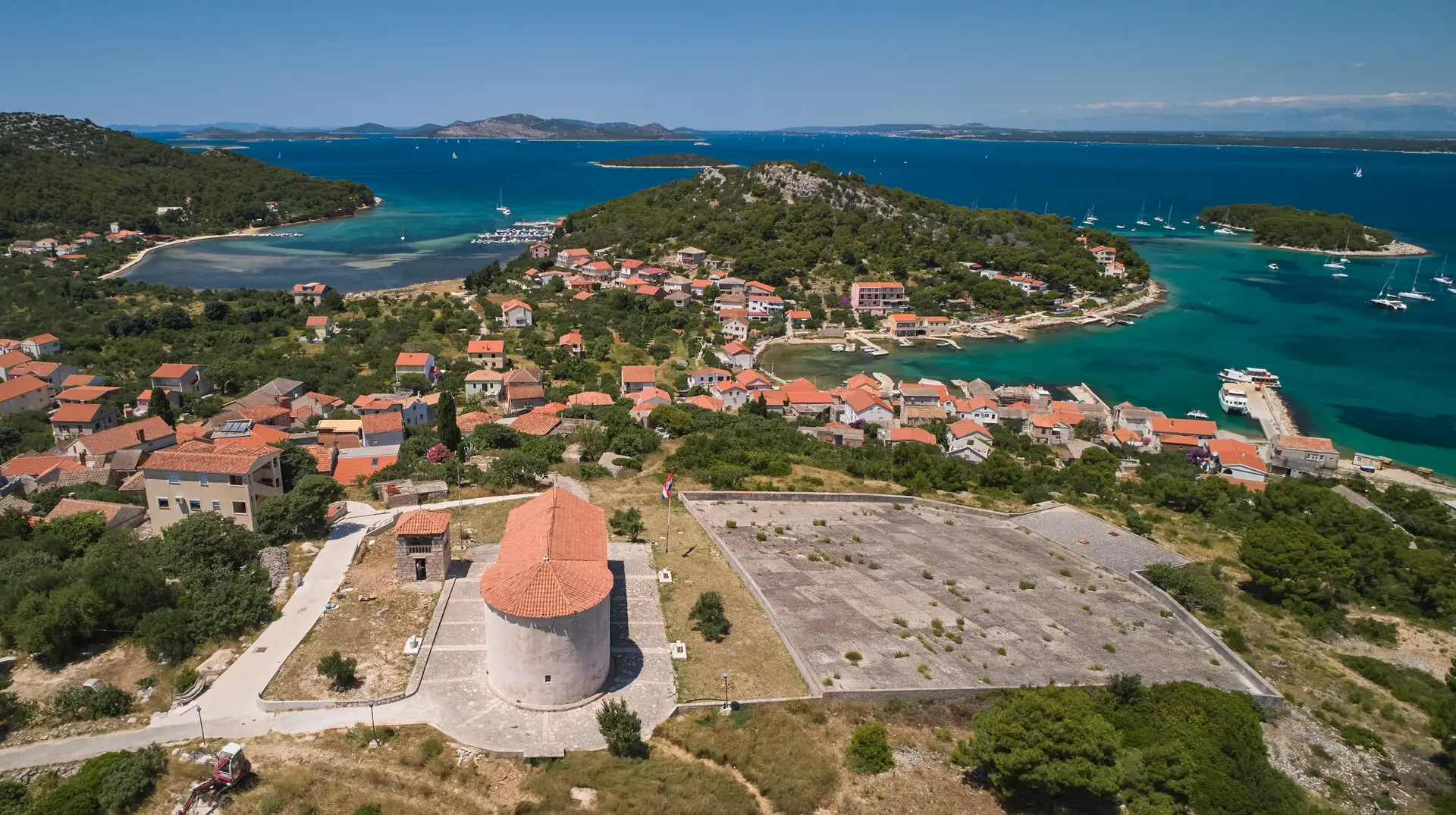
Fishing, agriculture, the preservation of old customs and ancient history give Vrgada a special charm — evoking Dalmatia and the Mediterranean as they once were. The island lies in the Pašman Channel, opposite Pakoštane and Biograd na Moru.
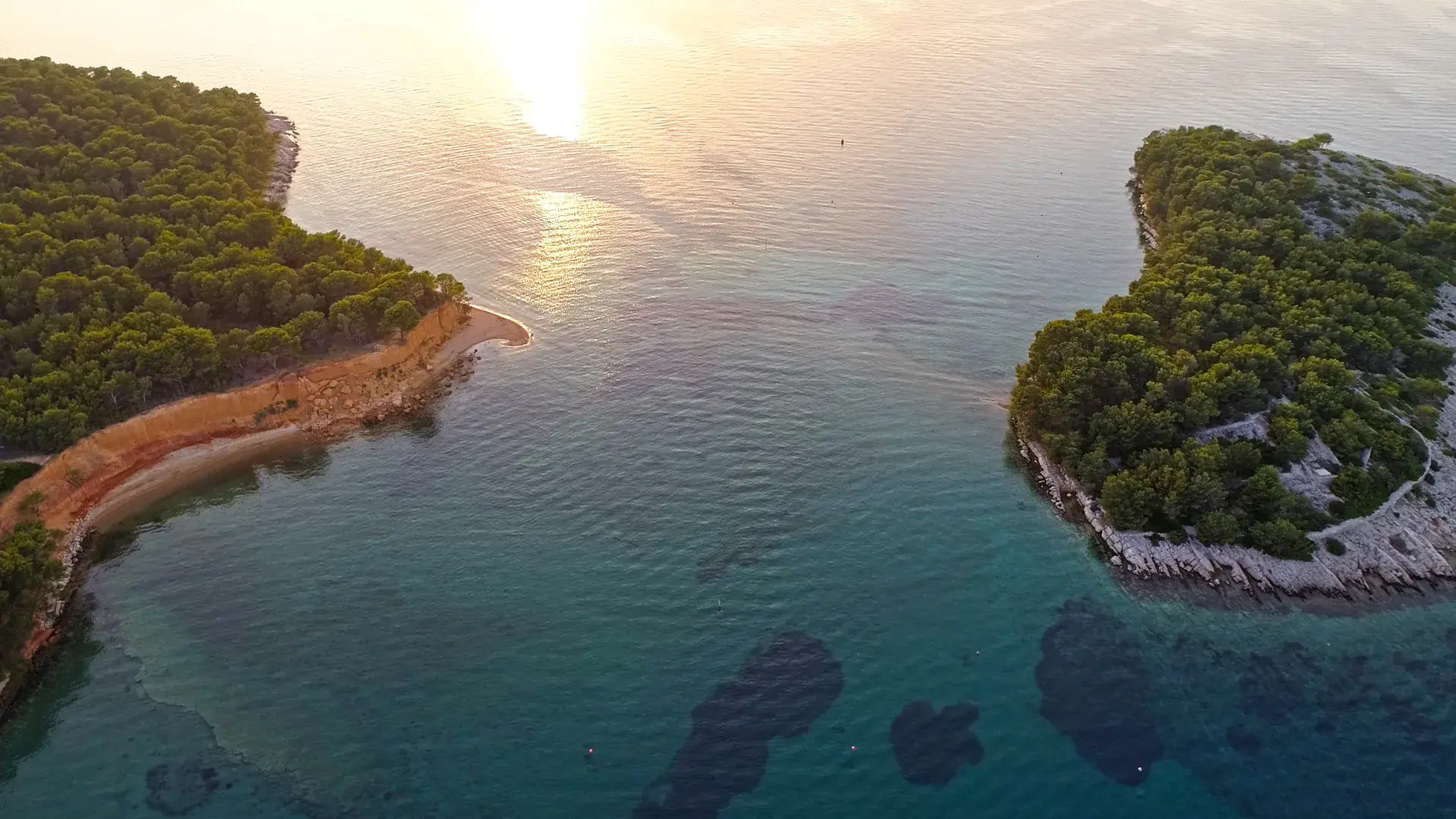
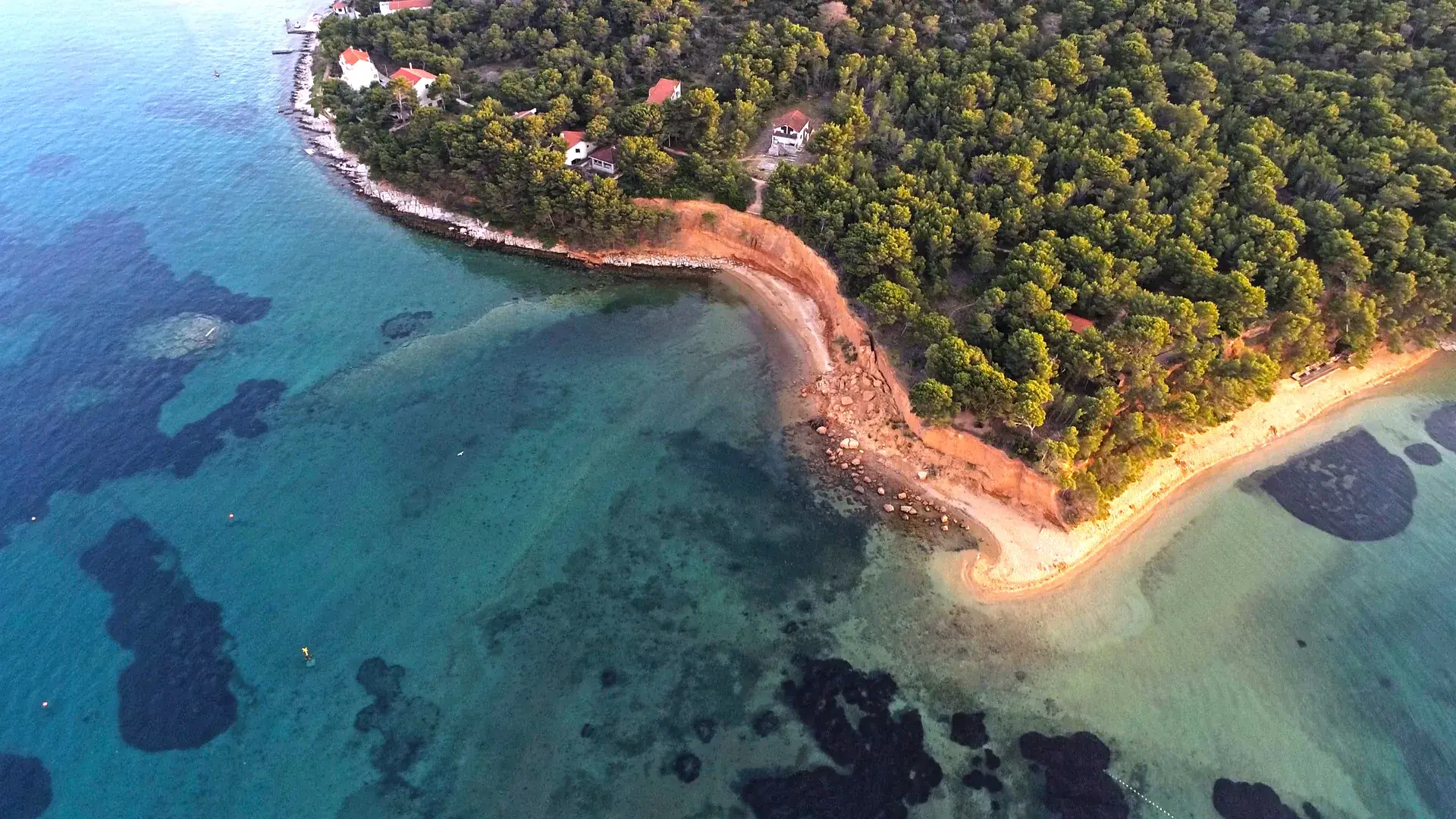
Thousands of visitors are delighted by Vrgada's stunning sandy beach Podbrizi — its name meaning "beneath the hill." Above it rises a mesmerising wall of reddish sand — the Red Cliff (Crveni Brig) — set beneath the dense pine forest of Gradina hill.
This ancient red rampart attracted the Illyrians, Vrgada's earliest inhabitants. It inspired the Romans so deeply that they named the island Insula rubricata — the Red Island. The early Croatians called it Lapkat, and the Venetians gave it the name that has survived to this day — Vergada (Vrgada).
As your feet sink into the golden sand and clear waters, Podbrizi offers a unique experience. The beach stretches in two directions, joining at the "golden point" (punta). Beside it lies the islet of Artina — once part of this magical sandy land. You can reach Artina by boat or by swimming, as neither the depth nor the distance presents an obstacle for the average swimmer.
Staying on Podbrizi until sunset offers unforgettable scenes that only the sun and the sea of Vrgada can give.
Vrgada is one of the oldest inhabited islands in this part of the Adriatic. Historical records mention it as early as the 6th century, while prehistoric times saw it settled by the Illyrian tribe of the Liburnians. After the Liburnians came the ancient Romans, then the Byzantine army, and from the 9th century onwards the island became home to early Croatians.
Because of its strategic position in the Pašman Channel, Vrgada was repeatedly targeted by conquerors who controlled the eastern Adriatic from its lookouts. Its natural riches kept it for centuries in the hands of feudal lords who received it as a gift from Venice or held it on lease. The island gained its freedom only at the end of World War I, when its last owners — the conti de Vergada, the Damiani counts — departed.
Numerous cultural and historical monuments bear witness to the island's rich past:
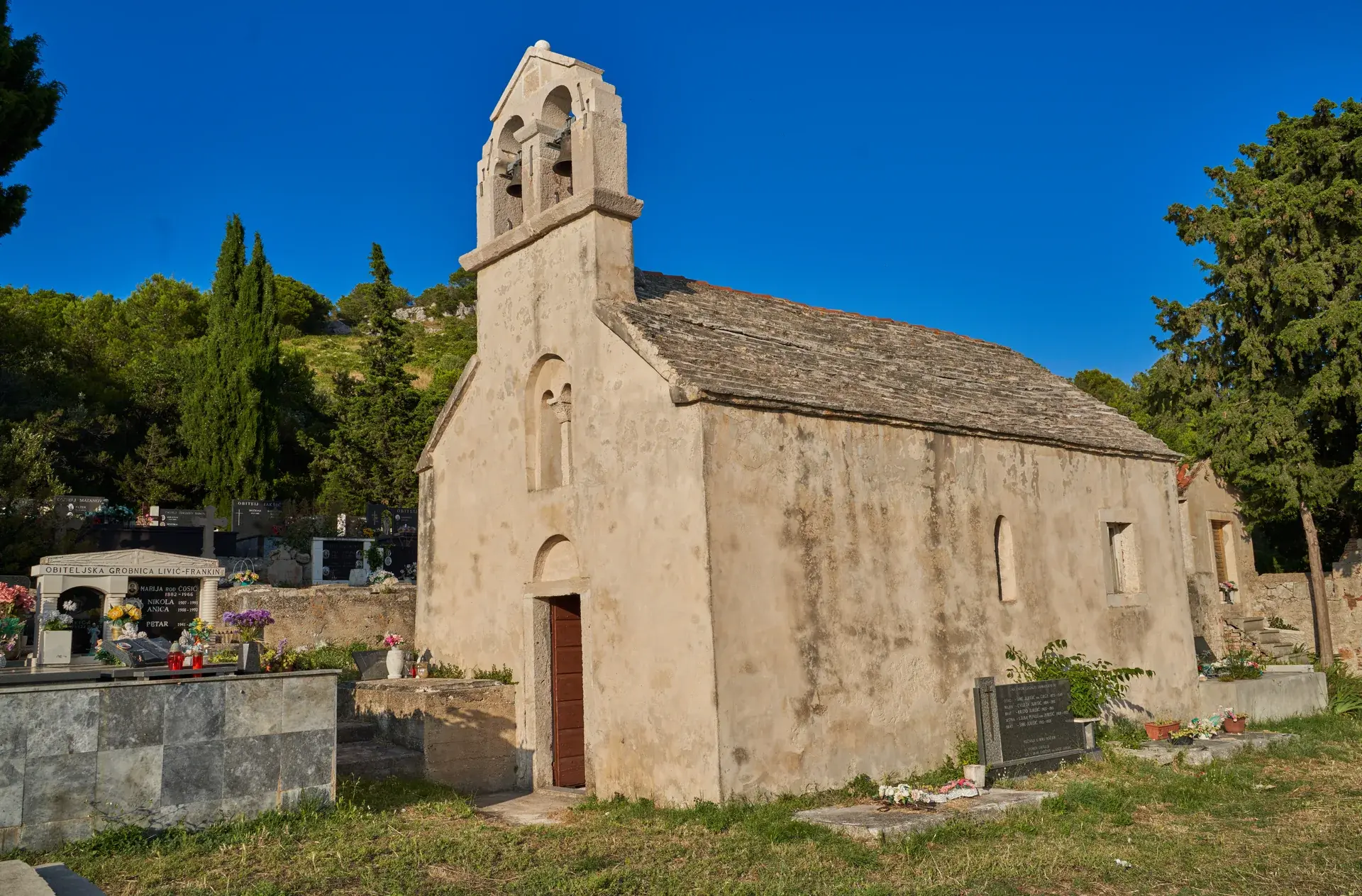
- The early Christian church of St. Andrew (9th century)
- The remains of the Byzantine military fortress on Gradina hill (6th century)
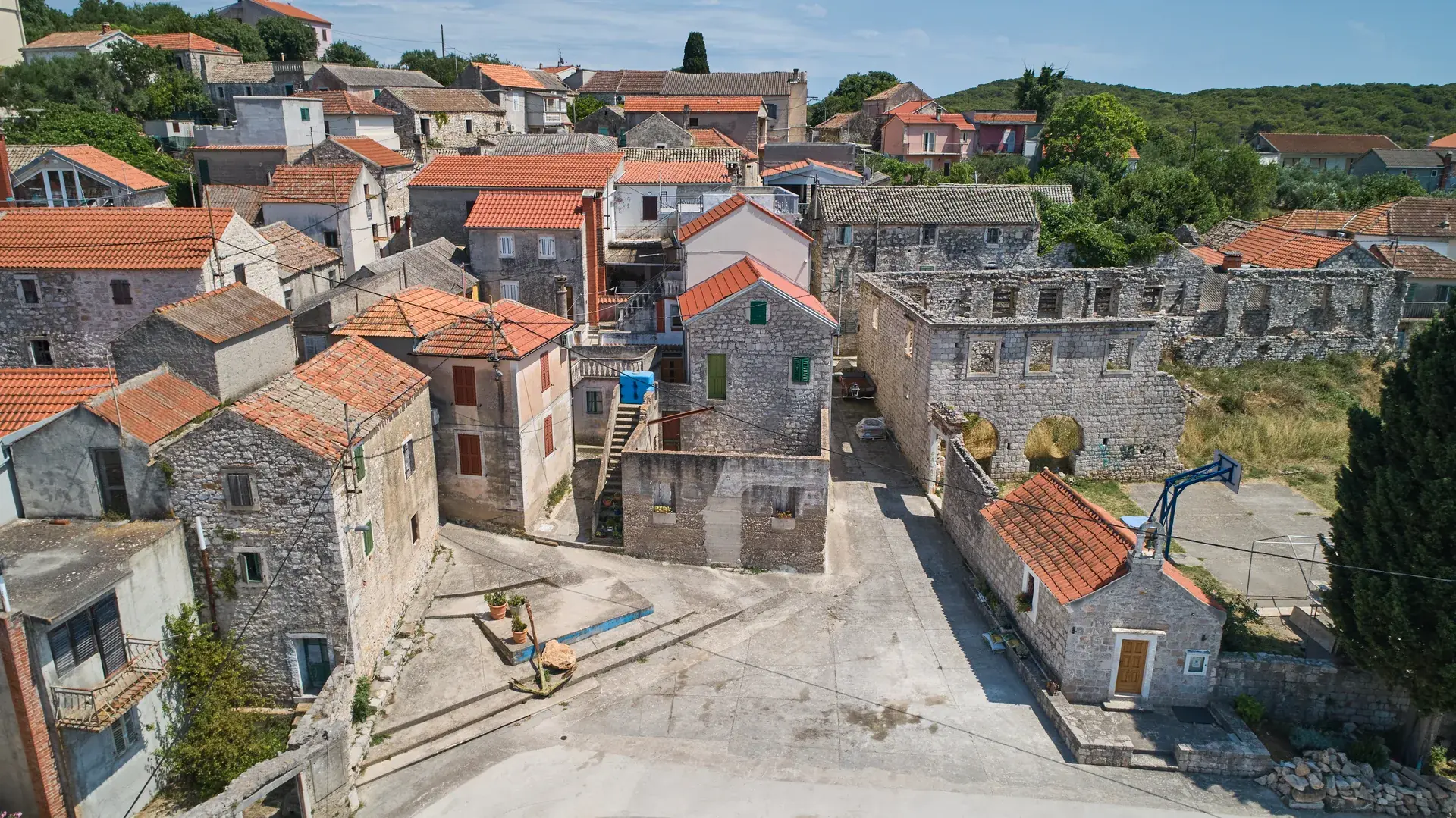
- The baroque manor of the Damiani counts (17th century)
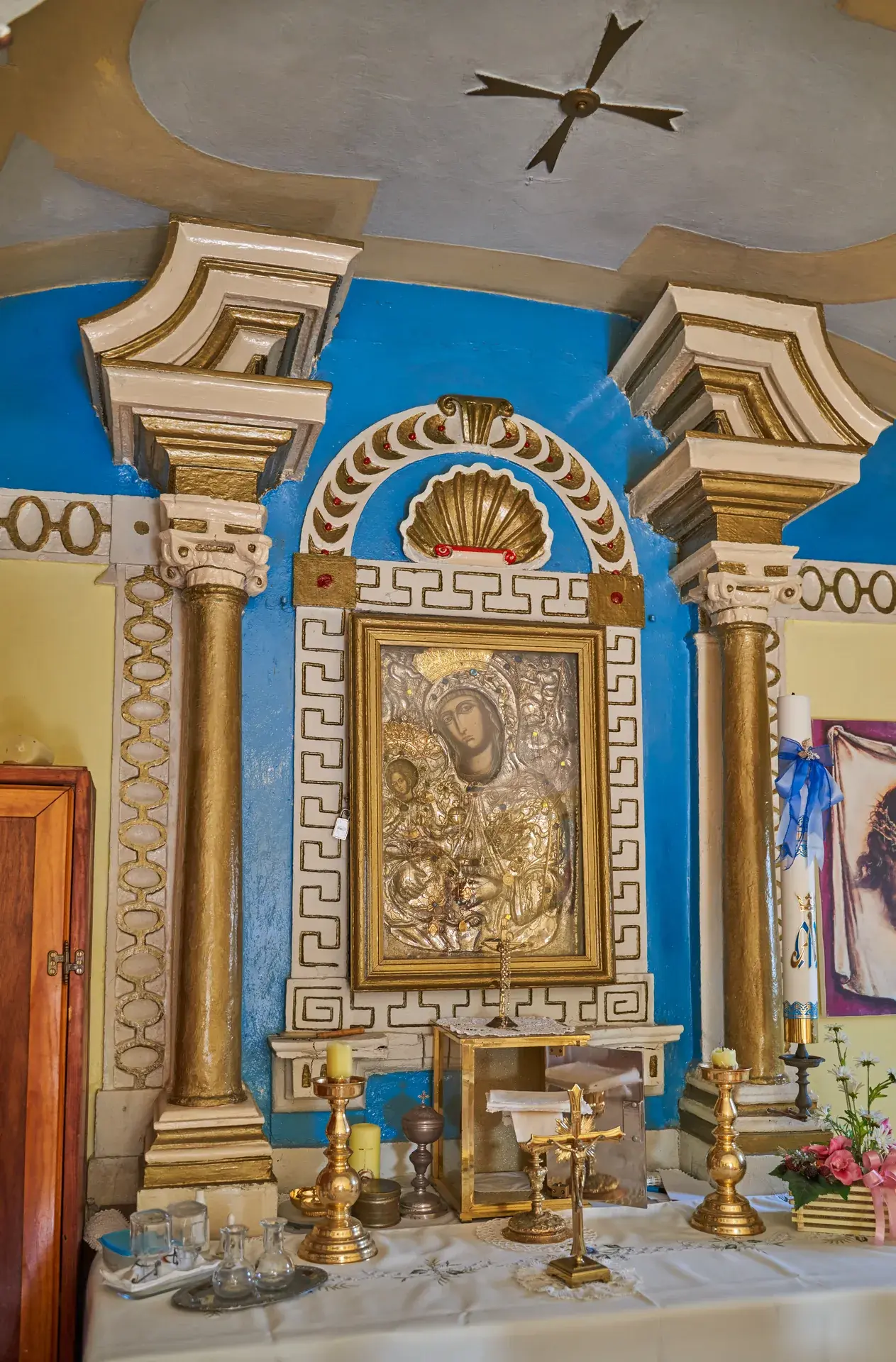
- The chapel of Our Lady of Health (17th century)
- The parish church of the Holy Trinity (17th century)
- The Kâva — a large communal cistern for rainwater, built during the Italian occupation in World War II
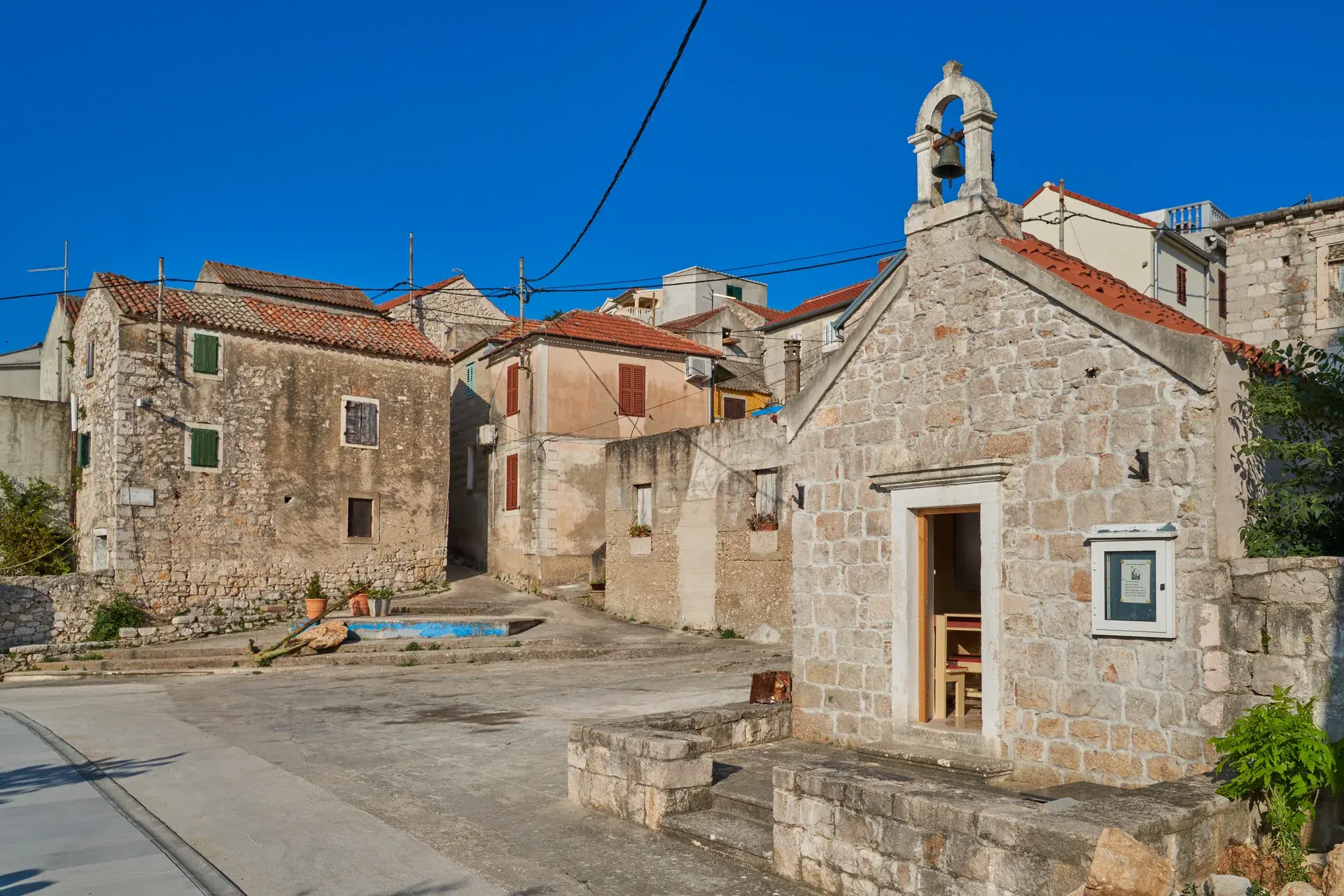
Walking through the old core of Vrgada, you will see typical Dalmatian courtyards and houses that tell the stories of the traditional life of Vrgada's fishermen and farmers.
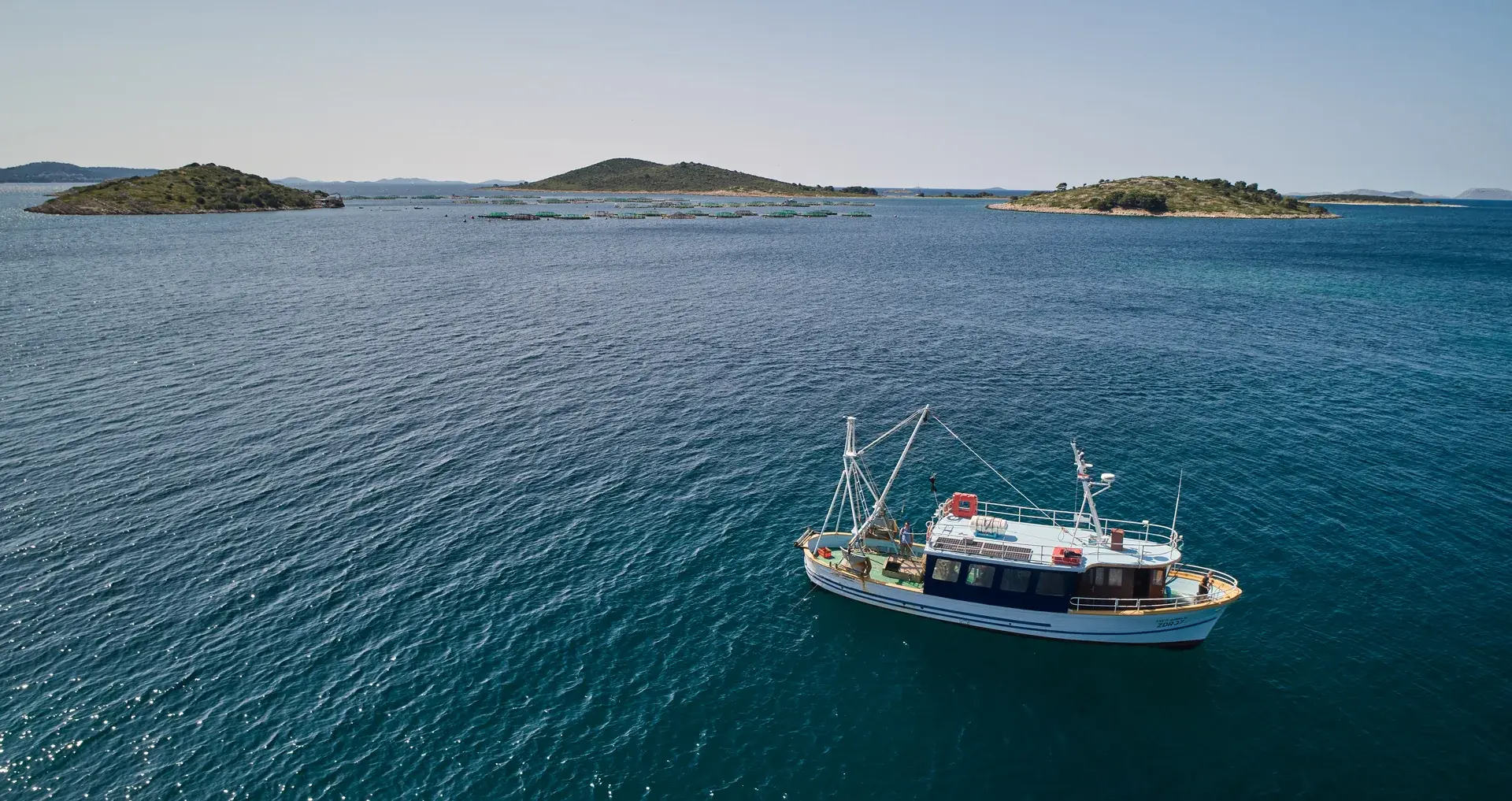
The people of Vrgada are among the finest fishermen of the Croatian sea. The sea is their greatest friend — and their greatest adversary. From the sea they make their living; the sea is loved and respected. The sea feeds and heals.
In the early 20th century, after the phylloxera plague destroyed Vrgada's vineyards, fishing became the islanders' main livelihood. In 1909, the Vrgada Fishing Producer Cooperative was founded — the only fishing cooperative on the Croatian islands that has been operating continuously to this day.
The fishermen of Vrgada are the authors of a unique traditional fishing technique called ludar. It is a playful way of catching white fish in which several fishermen work together with ropes, nets and scarers. The goal is to frighten the fish and gather them in one place, where a large catch can be made. As the old saying goes: "The fishermen play the fool, and the fish go mad." Alongside ludar, Vrgada's fishermen skilfully use all other fishing techniques, preserving the tradition to this day.
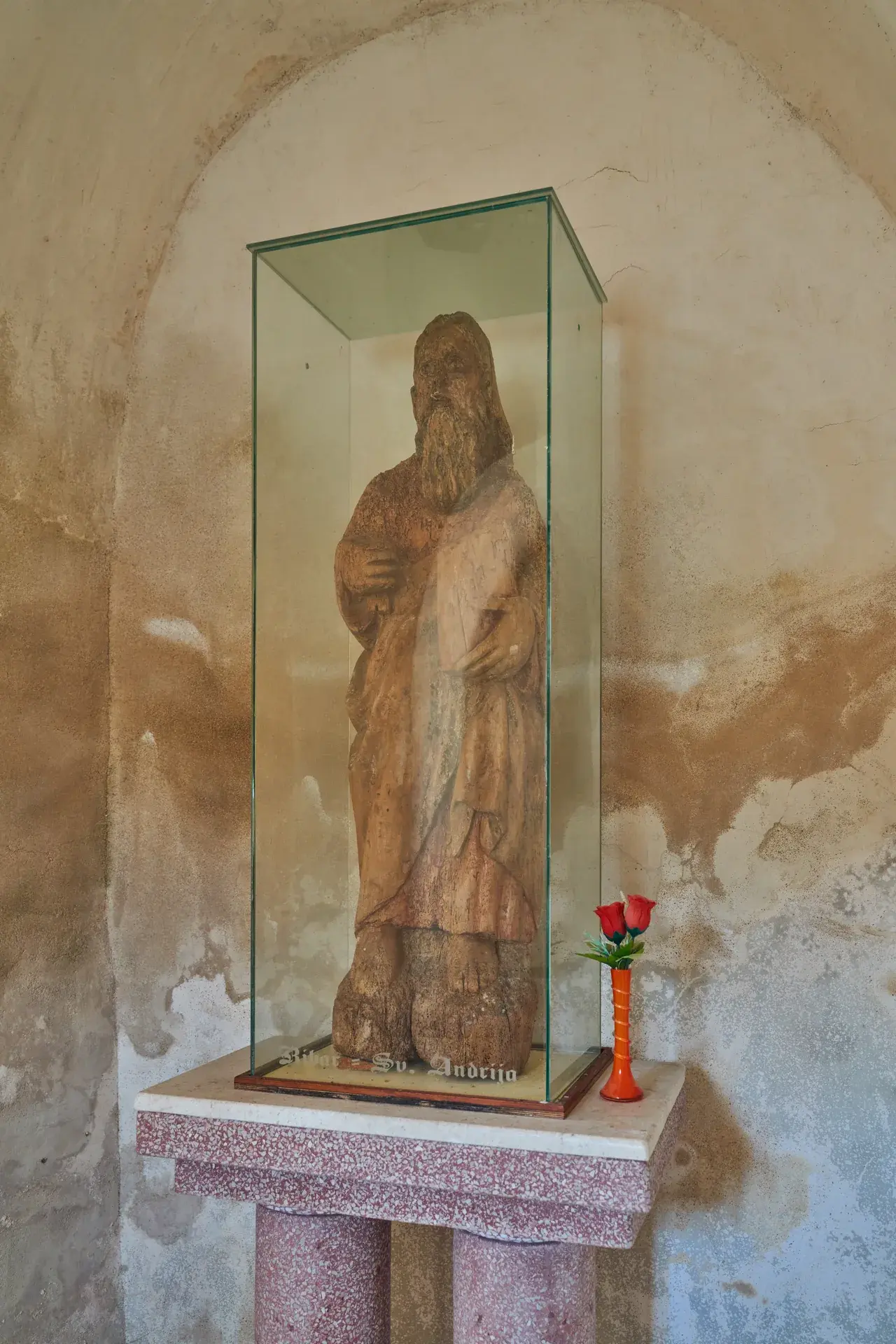
The patron saint of fishermen worldwide, and especially of Vrgada and its fishermen, is Saint Andrew. According to legend, his wooden statue floated to Vrgada in the 6th century and predestined the islanders to this honourable and worthy calling.
In honour of Saint Andrew, the oldest church on Vrgada, the largest bay of the island, and the fishing boat Sveti Andrija all bear his name. The Sveti Andrija — a wooden boat built in 1947 — still takes visitors on authentic fishing excursions today.
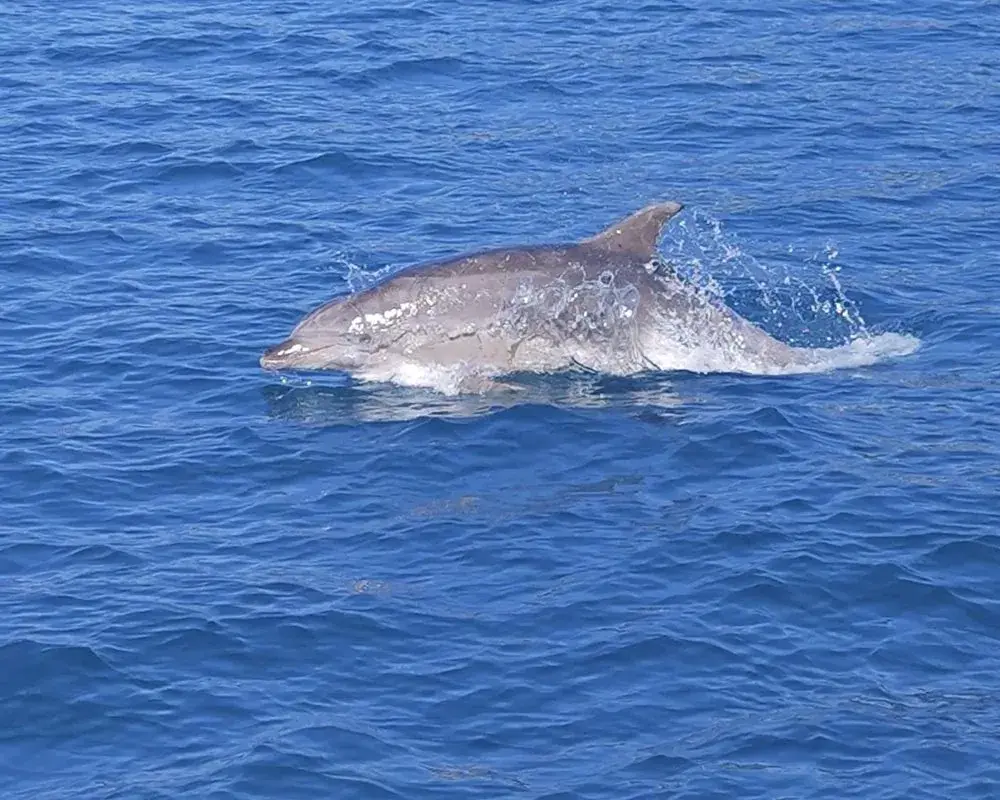
Dolphins and fishermen have often been great rivals at sea. For both, fish was the source of life. Dolphins would tear the nets of Vrgada's fishermen, and the fishermen would chase and scare them.
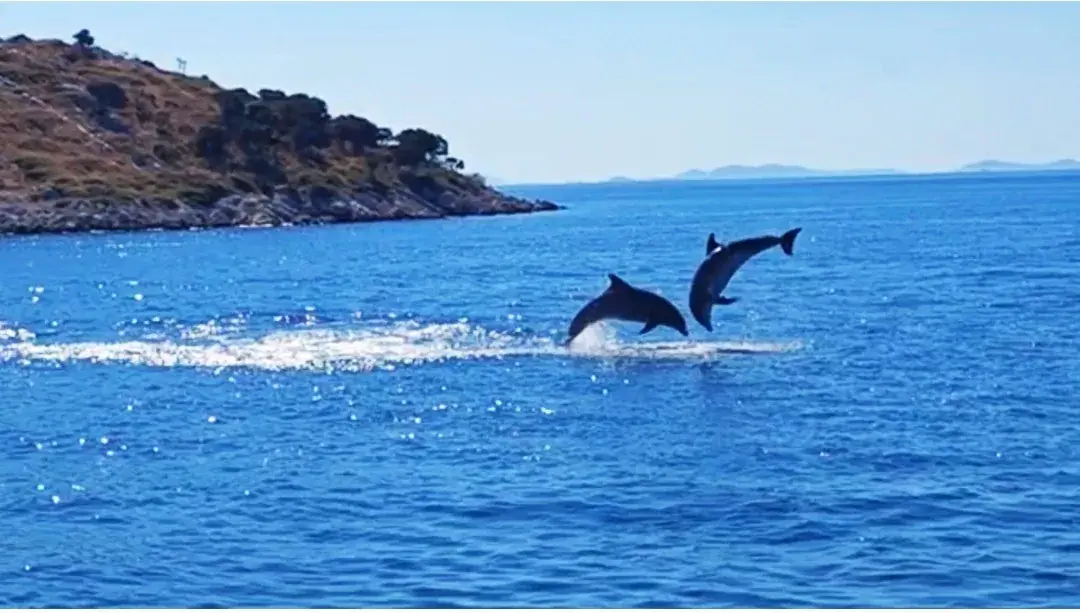
Although ancient rivals, the fishermen and dolphins of Vrgada always greet each other warmly. Dolphins follow the fishing boats, swimming before the bow and leaping high — as if to remind everyone who is the true master of these waters.
Their frequent presence in Vrgada's waters proves how safe and protected these intelligent marine animals feel here. The species you will encounter near Vrgada is the bottlenose dolphin (Tursiops truncatus) — adults reach 2 to 4 metres in length and weigh between 100 and 500 kilograms.
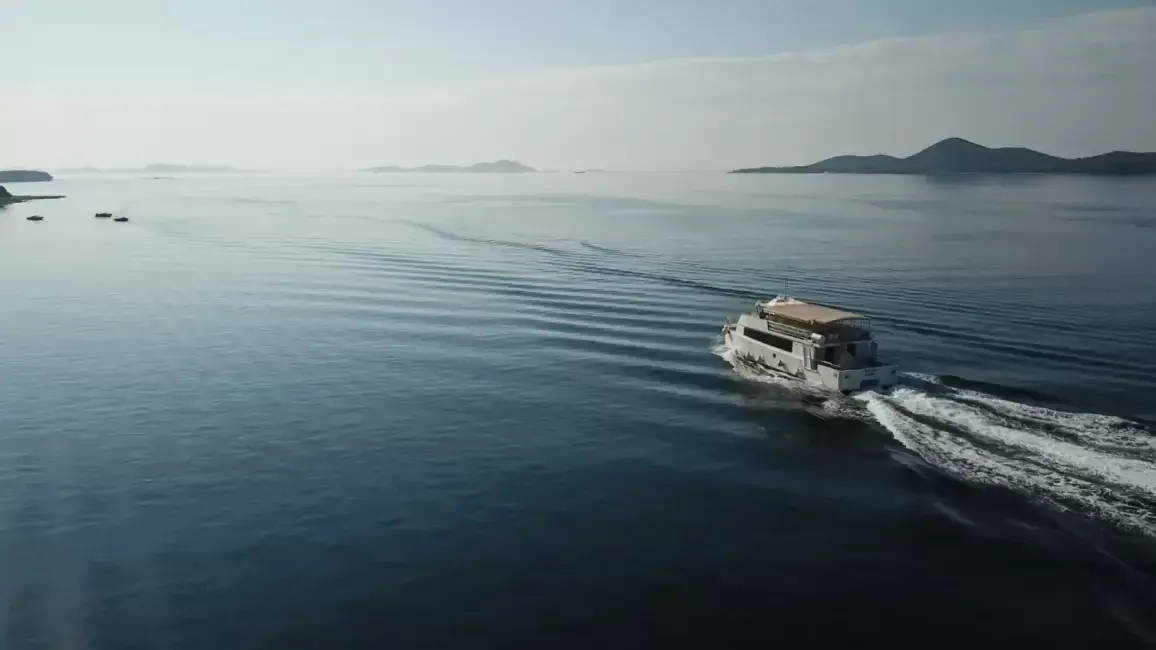
Vrgada Island is reachable exclusively by boat. Public ferry line 415 connects Vrgada with Pakoštane and Biograd na Moru throughout the year. The service is operated by the Vrgada Fishing Producer Cooperative.
The crossing from Pakoštane takes about 30 minutes, and from Biograd about one hour. The boats carry passengers, luggage and bicycles. During the high season, booking tickets in advance is recommended.